

By: Chioma Madonna Ndukwu
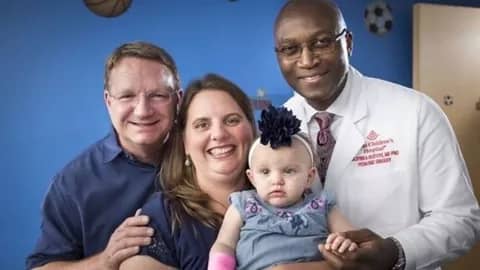
What if surgery did not have to wait for birth? What if doctors could reach into the womb, fix what is broken, and gently return the baby to safety; like a mechanic repairing an engine without turning off the car? That is exactly what happened when Dr. Oluyinka Olutoye, a Nigerian pediatric surgeon, led a team in the U.S. to operate on a baby before she was born.
In a world where early diagnosis saves lives, this groundbreaking fetal surgery reminds us that the womb is not off-limits for healing, and that the clock on healthcare starts ticking long before the delivery room.
At 16 weeks pregnant, Margaret Boemer learned that her unborn baby, Lynlee, had a sacrococcygeal teratoma—a tumor growing at the base of her tailbone. Though rare (about 1 in every 40,000 births), this tumor behaves like a medical parasite, drawing blood from the baby and placing enormous stress on the heart.
According to Dr. Cass Darrell, co-director of Texas Children’s Fetal Center: “The tumor acts like a thief—it steals blood from the fetus and forces the tiny heart to work overtime. If untreated, the baby could go into heart failure.”
By the 23rd week of pregnancy, the tumor had grown so large that intervention was no longer optional, it was urgent.
Fetal surgery is one of the highest-risk procedures in modern medicine. It requires a team of surgeons, anesthetists, neonatologists, and obstetricians, working in perfect rhythm. In Lynlee’s case:
The uterus was carefully opened like a page in a fragile book. The baby was partially delivered, just enough to expose the tumor. Surgeons then removed the mass, watching closely as her heart stopped and had to be restarted. After stabilizing her, they returned her to the womb, where she healed and continued to grow until she was delivered again at 36 weeks.
“She was born twice,” the nurses said. “First for the surgery, then for life.”
This medical breakthrough speaks volumes about the evolution of maternal and fetal care. The traditional model of “wait until birth” is no longer the only option. According to Prof. Akin Abayomi, a Nigerian public health expert:
“Prenatal health is not a waiting game. The earlier we act, the fewer the complications.”
Here is what this surgery teaches us about health:
Early Diagnosis Saves Lives: Without a routine scan, this tumor would have gone unnoticed until it was too late.
Fetal Patients Deserve Treatment: A fetus is not just a passenger in the womb; it can be a patient with real needs.
Multidisciplinary Medicine Works: Collaboration between specialties makes complex surgeries safer and more effective.
Advanced Care Can Prevent Disability: Without this operation, Lynlee may not have survived, or may have lived with lifelong damage.
Back home, Nigeria continues to struggle with high maternal and neonatal mortality rates, much of which is linked to late or poor prenatal care.
Prof. Isaac Adewole, former Minister of Health, once noted:
“We lose mothers and babies not because we don’t know what to do, but because we don’t do what we know.”
This success story is a wake-up call. Imagine what could happen if Nigerian hospitals had access to: Functional ultrasound equipment. Skilled fetal medicine specialists. Well-equipped neonatal ICU. Health insurance that covers maternal emergencies
Without investment in these areas, more babies will continue to fall through the cracks.
Pregnancy is not just about cravings and counting kicks. It is about monitoring, testing, and acting early. Every mother deserves access to: Routine anomaly scans. Clear referral pathways when complications are detected. Counselling and informed choices about available options
As Dr. Anthony Fauci once said:
“In medicine, timing is everything. Delay can turn treatable conditions into tragic outcomes.”
Dr. Olutoye’s success proves that life-saving care does not have to wait for delivery day. With the right tools and the right team, the womb can become a theatre of healing; not tragedy.
And to those who believe that hope ends with a bad scan result, remember this:
“So long as there’s a heartbeat, there’s still a fighting chance.” — Dr. Oluyinka Olutoye
About The Author













Leave a comment