Home News Ghana’s Free School Plan Was A Good Start.
News

Ghana’s Free School Plan Was A Good Start.

Share
Share

By Chinasaokwu Helen Okoro


Ghana’s free senior high school policy needs robust revision and sustainable funding, argues an advisor to Ghana’s President-elect John Mahama.
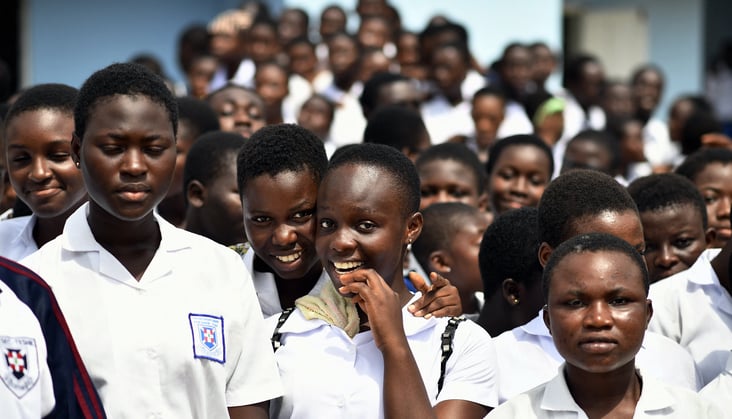
In 2017, Ghana took a bold step by introducing its Free Senior High School (SHS) policy, a reform intended to transform the educational landscape and make secondary education accessible to all.

The policy’s goals were clear and laudable: alleviate financial burdens on families, open the doors of learning to those previously excluded, and ultimately close the longstanding gap between rural and urban schooling. Yet, nearly seven years on, the scheme’s promise remains only partially fulfilled. While it has certainly broadened access, there are pressing questions about its quality, long-term funding, and the deep-rooted inequalities it was supposed to address.

The seeds of Ghana’s uneven educational development were planted in the colonial era. Under British rule, education was designed to serve imperial ends, cultivating a small urban-based elite while neglecting vast rural areas. Even after independence, these inequalities have proved stubborn. Urban schools, historically equipped with better resources, infrastructure, and trained teachers, continued to flourish. Rural schools, meanwhile, often struggle with shortages of classrooms and basic materials.

The Free SHS initiative was initially welcomed as a remedy to these injustices. In practice, however, it has not fully delivered. It has swelled enrolment, yes — but often without the necessary expansion in classrooms or teaching staff. Consequently, rural schools face overcrowded classrooms, stretched resources, and a decline in teaching quality, just as they try to serve more students than ever before.

Quality matters at least as much as access. Education should be transformative: it should empower young minds with critical thinking skills, technical competencies, and the capacity to innovate. Yet simply allowing more students into the system does not guarantee these outcomes. Overcrowded classrooms, teacher shortages, and a lack of proper materials threaten to undermine the quality that Free SHS was meant to safeguard. Data shows that secondary enrolment shot up from about 813,000 in 2017 to over 1.2 million by 2023. That surge puts huge pressure on infrastructure. While some top urban schools struggle to absorb new arrivals
many rural ones, which were already behind, now contend with class sizes that strain any serious attempt at student-centred learning.

Aligning Ghana’s tax structure
Beyond the challenge of quality, funding remains a core concern. The government’s heavy reliance on the Annual Budget Funding Amount (ABFA), derived primarily from oil revenues, poses serious sustainability issues. Oil prices are notoriously volatile; basing a flagship social programme on such an uncertain income stream is risky. Indeed, the government’s difficulty in borrowing from international capital markets in recent years only highlights how fragile these financial foundations are. One way forward would be to shift towards more stable and predictable funding mechanisms. A modest rise in Value Added Tax (VAT), for instance, could offer a dependable revenue source to secure Free SHS for the long haul. By aligning Ghana’s tax structure more closely with international norms — where average VAT rates often surpass Ghana’s current levels — the government could ensure that education financing does not hinge so perilously on global commodity prices.

Critics might balk at higher taxes, yet a slight VAT increase earmarked for education could be designed to be broad-based, reducing the burden on any single segment of society. Unlike the E-Levy or other less stable taxes, VAT applies widely and can capture economic activity across both formal and informal sectors. Such a move would not only generate a steady stream of revenue but also spread the cost of education more equitably. Over time, the government could integrate this approach into a transparent, long-term plan, giving parents, schools, and communities a clear sense of how Free SHS will be funded and improved.

Beyond access and funding
Still, financing alone will not solve all the challenges. Ghana must look beyond access and funding to focus on educational quality. Countries like Finland and South Korea have shown that world-class results come from consistent investment in teacher training, strong curricular frameworks, and adequate facilities. Ghana should learn from these examples. Free SHS should go hand-in-hand with efforts to strengthen teacher recruitment, enhance infrastructure, invest in science, technology, engineering, and maths (STEM), and bolster vocational and technical paths that align with future labour market demands.

A thorough revision of the Free SHS policy is now imperative. This does not mean scrapping the programme — on the contrary, its vision of equitable, universal education is more urgent than ever. But it does mean confronting legacy issues that keep rural students behind, finding sustainable funding mechanisms, and rethinking how to maintain quality in a rapidly expanding system. The current moment offers a chance to reset, to ensure that Free SHS not only survives but thrives. By doing so, Ghana can move closer to the day when every child, whether in Accra or a remote northern village, not only sits in a secondary classroom but receives the high-quality education they deserve. The time to act is now.

About The Author

Share

Leave a comment

Leave a Reply

Your email address will not be published. Required fields are marked *

LATEST POST

Africa

Africa’s Talking Drum: Mama Nkem Left Before Her Daughter Was Ready

By: Chioma Madonna Ndukwu Africa’s Talking Drum: Mama Nkem Left Before Her Daughter Was Ready In Umuoma Village, people said that a mother’s...

Sport

Cash Reportedly Stolen From Super Falcons Players’ Hotel Rooms in Casablanca

Cash Reportedly Stolen From Super Falcons Players’ Hotel Rooms in Casablanca The Super Falcons’ preparations for the 2026 Women’s Africa Cup of Nations...

AfricaMetro

Harvard-Trained Nigerian-American Engineer Raises $7m for Robot Designed to Assist Hair Braiders A Nigerian-American engineer and Harvard graduate, Yinka Ogunbiyi, has secured $7 million in seed funding to develop a robotic device designed to make hair braiding faster and less physically demanding for professional stylists. Ogunbiyi’s company, HaloBraid, is developing what it describes as the world’s first patented braid-assist robot. The device is designed to work with hairstylists by handling some of the repetitive movements involved in knotless braiding. The funding round was led by Seven Seven Six, a venture capital firm founded by Reddit co-founder Alexis Ohanian. AlleyCorp and Bling Capital were also among the investors. The technology has already attracted significant interest, with more than 7,000 salons reportedly waiting to use the system. HaloBraid is designed as a collaborative robot, meaning it works alongside a human stylist instead of attempting to replace one. The hairstylist remains responsible for sectioning the hair, creating the initial knot and completing the final styling. The robot then assists with the repetitive weaving process down the length of the braid before the stylist returns to finish and shape the ends. According to the company, the technology could cut the time spent on some knotless braid appointments by roughly half, allowing salons to serve more clients while reducing the physical pressure on stylists. For Ogunbiyi, the idea was born from personal experience. During the COVID-19 pandemic, she spent four days installing knotless braids on herself, an experience that made her consider how technology could assist with the most repetitive aspects of the process. She subsequently teamed up with co-founder David Afolabi to develop HaloBraid. The company’s technology is also aimed at addressing the physical demands of professional braiding. Stylists who spend years performing repetitive movements can experience problems affecting their wrists, hands, shoulders, back and joints. By assisting with the most repetitive stage of braiding, HaloBraid hopes to reduce the strain on beauty professionals and help them work more efficiently. Ogunbiyi said the technology would not take away from the personal experience of visiting a salon. Rather, she believes it can allow stylists to spend less time on repetitive movements while continuing to handle the creative and personal aspects of hairstyling. Before launching HaloBraid, Ogunbiyi worked on smart kitchen appliances and Internet of Things products. She holds a joint master’s degree in engineering and business administration from Harvard University. With a $7 million investment and thousands of salons already expressing interest, HaloBraid is seeking to introduce robotics into one of the world’s largest and most labour-intensive beauty markets.

Harvard-Trained Nigerian-American Engineer Raises $7m for Robot Designed to Assist Hair Braiders A Nigerian-American engineer and Harvard graduate, Yinka Ogunbiyi, has secured $7...

Entertainment

Days to Their Wedding, VeryDarkMan Sends Peller and Jarvis a Serious Warning

Days to Their Wedding, VeryDarkMan Sends Peller and Jarvis a Serious Warning Social media critic Martins Vincent Otse, popularly known as VeryDarkMan, has...

Sport

IOC Declines to Investigate Infantino Over Alleged Political Neutrality Breach

IOC Declines to Investigate Infantino Over Alleged Political Neutrality Breach The International Olympic Committee has refused to pursue a complaint against FIFA President...

News

IMO APC YOUTH LEAGUE INAUGURATES BOOTH WATCHDOGS, WARD CANVASSERS TO STRENGTHEN GRASSROOTS STRUCTURE AHEAD OF 2027

The Imo State Chapter of the APC Youth League on Thursday, July 23, 2026, successfully hosted its Interactive Session and Banquet at the...

Travel

VIDEO: 68 Passengers Survive Enugu Air Crash-Landing at Benin Airport

VIDEO: 68 Passengers Survive Enugu Air Crash-Landing at Benin Airport Sixty-eight passengers have escaped without reported injuries after an Enugu Air aircraft crash-landed...

News

WASTE EVACUATION DELAYS WILL SOON EASE* *– LAWMA*

*PRESS RELEASE* *WASTE EVACUATION DELAYS WILL SOON EASE* *– LAWMA* *LASG to Acquire 3,000 Compactor Trucks Within Three Years* The Lagos Waste Management...

AfricaMetro

5 Members of Same Family Found Dead Inside Abia Residence

5 Members of Same Family Found Dead Inside Abia Residence A family of five has been found dead inside their residence in Umuimo...

Africa

US Weighs Military Action in Mali as Jihadist Threat Spreads Across the Sahel

US Weighs Military Action in Mali as Jihadist Threat Spreads Across the Sahel The United States is weighing possible military action against Jama’at...

Africa

African Talking Drum: Tortoise Lost More Than His Name

By: Chioma Madonna Ndukwu African Talking Drum: Tortoise Lost More Than His Name In the old days, before the animals began keeping count...

Related Articles

WASTE EVACUATION DELAYS WILL SOON EASE* *– LAWMA*

*PRESS RELEASE* *WASTE EVACUATION DELAYS WILL SOON EASE* *– LAWMA* *LASG to...

Police Storm Abuja Facility After VDM Uncovers Alleged Baby Factory

Police Storm Abuja Facility After VDM Uncovers Alleged Baby Factory A police...

U.S. based doctor calls on govt. to streamline emergency care in Nigeria’s hospitals

U.S. based doctor calls on govt. to streamline emergency care in Nigeria’s...