Home Security We Know Who They Are — Senate Approves Death Penalty for Kidnappers, Seeks Firearms Law Review
Security

We Know Who They Are — Senate Approves Death Penalty for Kidnappers, Seeks Firearms Law Review

Share
Share

By: Chioma Madonna Ndukwu


We Know Who They Are — Senate Approves Death Penalty for Kidnappers, Seeks Firearms Law Review


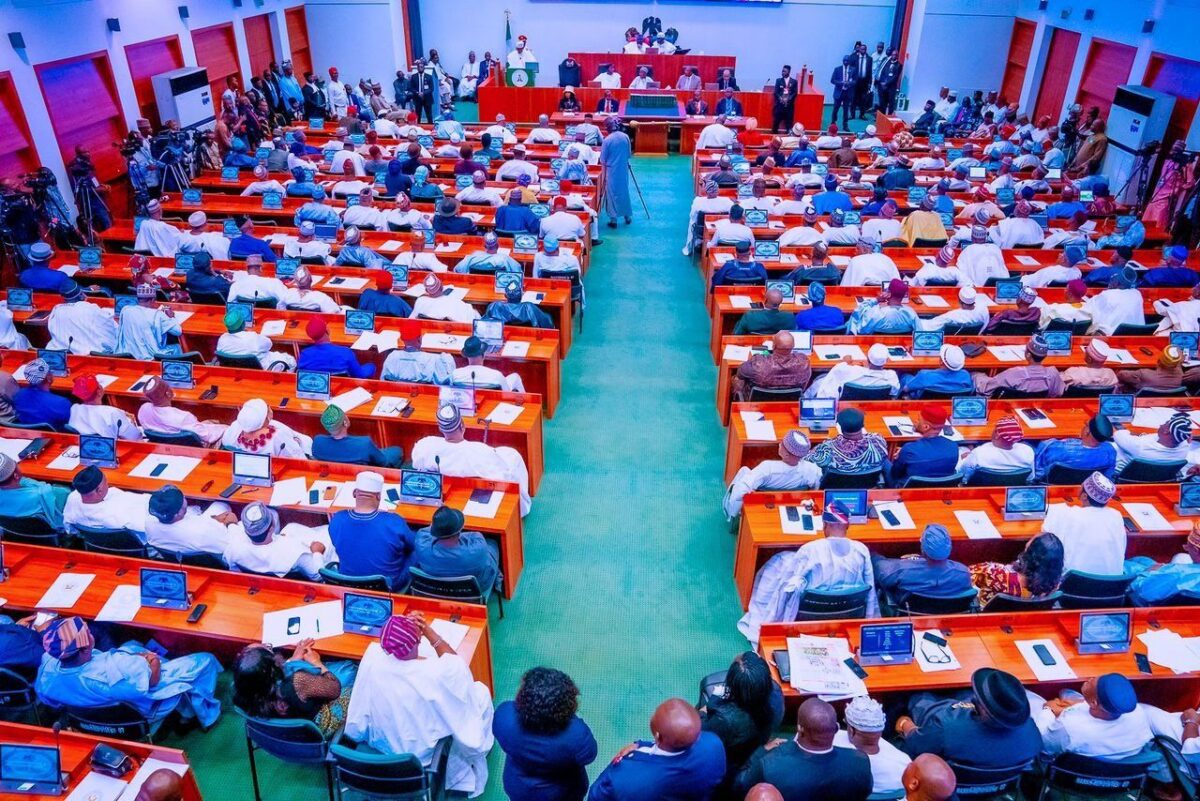
The Nigerian Senate has endorsed the death penalty for kidnapping and demanded an urgent overhaul of the country’s firearms law as insecurity continues to spread across Kwara, Kebbi and Niger States.


Lawmakers said the escalating violence has exposed deep flaws in Nigeria’s security response and called for stronger federal action to protect communities, schools and worship centres.


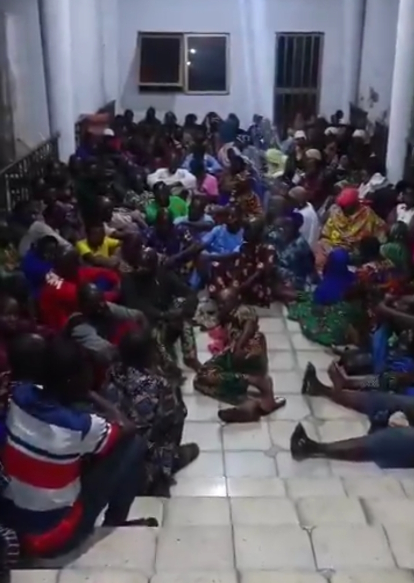
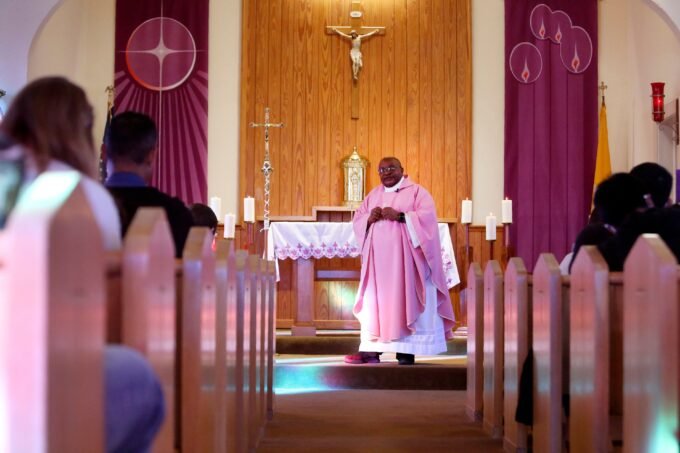
The resolution followed a motion raised by Senator Lola Ashiru of Kwara South, who described a disturbing rise in coordinated attacks, including the November 18 assault on Christ Apostolic Church in Eruku where two worshippers were killed and 38 taken hostage.


The victims were later rescued in joint security operations, alongside 51 abducted students freed in Niger State.


Ashiru told his colleagues that insecurity has forced schools to shut down in parts of Kwara, Niger and Kebbi and across all Federal Unity Colleges nationwide.


“We must act decisively to protect children, worshippers and rural communities from further trauma,” he warned.

The Senate expressed shock over reports that military personnel were withdrawn from Government Girls Secondary School, Maga, in Kebbi shortly before a kidnapping incident.


Lawmakers demanded a full investigation into the decision, which they said may have emboldened the attackers.


Senators also pointed to increasingly organised criminal gangs exploiting forest corridors linking Kwara to Kogi, Kebbi to Zamfara, and the Shiroro–Rafi–Munya axis in Niger.


According to Ashiru, these networks thrive with help from internal collaborators who provide intelligence, logistics and escape routes.


During the debate, Senator Sani Musa questioned the recent rescue of abductees “without firing a shot,” suggesting that ransom may have been paid.


He challenged security agencies to use available technology to track terrorists who openly communicate via mobile phones.


Senator Enyinnaya Abaribe accused the government of downplaying the scale of the crisis, saying some communities in the North now pay taxes to terrorists for protection.


He condemned the troop withdrawal in Kebbi, saying such decisions put children directly in harm’s way.

Another lawmaker, Abdul Ningi, lamented that kidnapping has turned into a “more lucrative business than oil and politics,” while Senator Sadiq Umar said the fight against terrorism would remain difficult unless collaborators are identified and prosecuted. Umar added that gaps in troop deployment must be urgently addressed.


Borno Senator Ali Ndume highlighted how overstretched Nigeria’s armed forces have become.


He noted that Egypt, with a smaller population, maintains a far larger army and police force. Nigeria’s security agencies, he said, are spread thin across active operations in 32 states.


Benue lawmaker Titus Zam said many communities in his state have been overrun by bandits. “The military knows their locations,” he insisted, calling for a more forceful and sustained offensive.


Kebbi Senator Yahaya Abdullahi echoed this, stressing that Nigeria cannot continue shutting schools because of bandits. “We should go after them and eliminate them,” he said.


Deputy Senate President Barau Jibrin urged collective national action, warning that no state can confront the crisis alone.


Senate Majority Leader Opeyemi Bamidele said politics must be put aside, while Minority Leader Abba Moro raised concerns that insecurity could spread further if not confronted swiftly.


Lawmakers commended President Bola Tinubu for cancelling foreign trips to directly supervise security efforts.


They called for intelligence-driven operations, increased aerial surveillance and a Joint Task Force along the Kwara–Kogi corridor with new operating bases in Eruku, Babanla, Oke-Ero, Isanlu and Wasagu.


The Senate also tasked the Ministry of Humanitarian Affairs and NEMA with providing immediate relief for affected families. Citizens were urged to remain vigilant and avoid supporting criminal networks.


To strengthen the legal framework, the Senate pushed for kidnapping to be formally classified as terrorism—punishable by death—and urged a comprehensive review of Nigeria’s firearms laws to allow responsible citizens to bear arms for self-defence, a practice they said mirrors that of over 175 countries.


The chamber dissolved committees on National Security, Intelligence and Air Force for reconstitution aimed at boosting oversight. A minute of silence was held for victims of recent attacks.


Kidnapping has evolved into one of Nigeria’s most persistent security threats, particularly across the North-West and North-Central regions where bandits and armed groups operate across vast, ungoverned forest corridors.


The surge in attacks on schools since the Chibok abductions continues to put pressure on state and federal authorities, many of whom have resorted to shutting schools to protect students.


Recent attacks in Kwara, Niger and Kebbi reflect a widening pattern of coordinated raids targeting rural communities, churches, schools and key highways.


Communities in border areas between Kwara and Kogi, as well as Kebbi and Zamfara, have especially suffered due to poor roads and limited military presence.


Security agencies have carried out rescues, but lawmakers say broader systemic failures—weak intelligence networks, understaffed military units and alleged internal collaboration—continue to fuel the crisis.


Senators argue that Nigeria is effectively in a state of internal warfare and that tougher laws, stronger institutions and modern technology are now urgently required to contain the spread of organised criminal groups.

About The Author

Share

Leave a comment

Leave a Reply

Your email address will not be published. Required fields are marked *

LATEST POST

SportWorld

Afrobeats Takes Center Stage at the 2026 FIFA World Cup

Afrobeats Takes Center Stage at the 2026 FIFA World Cup   Afrobeats is set to make a major impact at the 2026 FIFA...

Health

Uganda Records New Ebola Cases as WHO Director-General Visits Amid Regional Response Efforts

Uganda Records New Ebola Cases as WHO Director-General Visits Amid Regional Response Efforts The World Health Organization (WHO) Director-General, Dr. Tedros Adhanom Ghebreyesus,...

EnvironmentWorld

Strong 7.8 Quake in Philippines Leaves Multiple Dead, Sparks Widespread Tsunami Alerts A powerful 7.8-magnitude earthquake struck the southern Philippines on Monday morning, leaving multiple people dead and triggering tsunami alerts across several Pacific countries as authorities rushed to contain the unfolding disaster. The quake hit near Sarangani province in Mindanao at a shallow depth, sending violent tremors through towns and cities including General Santos, where buildings collapsed and residents fled into the streets in panic. Emergency officials confirmed fatalities across different locations, including Davao Occidental, South Cotabato and General Santos, while rescue teams combed through debris in search of survivors as aftershocks continued to rattle the region. A second quake measuring 6.1 struck hours later, worsening the damage and intensifying fears among already displaced communities. Preliminary readings from the United States Geological Survey and other agencies showed slight variations in magnitude and depth, as scientists continued to analyse seismic data in real time. The Pacific Tsunami Warning Center issued alerts for several countries, warning that waves could reach coastal areas of the Philippines and parts of Indonesia, Palau, Taiwan and Papua New Guinea within hours. In some coastal zones, waves of more than three metres were considered possible. Authorities ordered immediate evacuations in vulnerable coastal communities, urging residents to move quickly to higher ground as a precaution against potential tsunami impact. Flights were suspended at General Santos International Airport, while schools and public services were temporarily shut down across affected areas as emergency operations expanded. President Ferdinand Marcos called for urgent action and calm, stressing that saving lives remained the top priority as rescue efforts intensified across the region. The Philippines, located along the Pacific “Ring of Fire,” is one of the most seismically active countries in the world, frequently exposed to earthquakes and volcanic activity. Neighbouring Japan and other Pacific nations also issued tsunami advisories as monitoring agencies continued to track possible wave developments across the region.

Strong 7.8 Quake in Philippines Leaves Multiple Dead, Sparks Widespread Tsunami Alerts A powerful 7.8-magnitude earthquake struck the southern Philippines on Monday morning,...

News

Mastering responsible gambling Essential tips for a safer experience

Mastering responsible gambling Essential tips for a safer experience Understanding Responsible Gambling Responsible gambling is a concept that emphasizes the importance of making...

Environment

FG, SPP launch climate governance data collection

FG, SPP launch climate governance data collection The Federal Ministry of Environment, through its Department of Climate Change, has launched data collection for...

News

AOC charges personnel to remain vigilant during march exercise

AOC charges personnel to remain vigilant during march exercise The Air Officer Commanding (AOC) Logistics Command, Nigerian Air Force, AVM Abubakar Suleh has...

News

Jak unikać uzależnienia od hazardu kluczowe wskazówki dla każdego игрока

Jak unikać uzależnienia od hazardu kluczowe wskazówki dla każdego игрока Wprowadzenie do problemu uzależnienia od hazardu Uzależnienie od hazardu to poważny problem, który...

Security

Nigeria 360 Hostages Freed as Boko Haram Retains Teenagers After Mass Abduction

Nigeria 360 Hostages Freed as Boko Haram Retains Teenagers After Mass Abduction At least 360 men, women, and children abducted in Nigeria have...

Africa

Africa’s Talking Drum: The Lion Who Stopped Listening

By: Chioma Madonna Ndukwu Africa’s Talking Drum: The Lion Who Stopped Listening In the savannah, the Lion once ruled with the council of...

News

Levitra Dosierung: En Guide til Sikker Brug

Indholdsfortegnelse Introduktion til Levitra Oplysninger om Levitra Anbefalet dosering Vigtige overvejelser Konklusion Introduktion til Levitra Levitra er et receptpligtigt lægemiddel, der bruges til...

AfricaEducationWorld

TODAY IN HISTORY – 8th June, 2026 – Africa World News 

TODAY IN HISTORY - 8th June, 2026 - Africa World News By Valentine Uchechukwu Ndukwu.   I cannot help the temptation of beginning...

Related Articles

Nigeria 360 Hostages Freed as Boko Haram Retains Teenagers After Mass Abduction

Nigeria 360 Hostages Freed as Boko Haram Retains Teenagers After Mass Abduction...

UN Demands Urgent Rescue as Oyo, Borno School Abductions Deepen National Alarm

UN Demands Urgent Rescue as Oyo, Borno School Abductions Deepen National Alarm...

Atiku Aide Urges DSS to Question Sunday Igboho Over Oyo School Abduction Claims

Atiku Aide Urges DSS to Question Sunday Igboho Over Oyo School Abduction...

You Cannot Pray Away Bandits – Mary Njoku Reacts To Yinka Alaseyori’s Advice

By Valentine Uchechukwu Ndukwu You Cannot Pray Away Bandits - Mary Njoku...