
Home News Africa Africa’s Talking Drum: The Day the Goats Began to Laugh
Africa

Africa’s Talking Drum: The Day the Goats Began to Laugh

Share
Share

By: Chioma Madonna Ndukwu

Africa’s Talking Drum: The Day the Goats Began to Laugh

In the hillside kingdom of Nduru, fear lived like an unpaid debt, always present. And at the center of that fear stood the Leopards.

The people spoke in low voices. Market women looked over their shoulders before complaining about taxes. Farmers avoided discussing leaders openly, even inside their own compounds.

For many seasons, the Leopards ruled Nduru with claws sharper than justice itself. They controlled the grain stores, guarded the king’s court, and moved through the villages like owners inspecting property.

Whenever anyone questioned them, the answer was always the same: “Be careful. Leopards do not forgive.” So the people endured.

Even when harvest taxes doubled, and village wells dried while palace fountains overflowed. Even when young men disappeared after speaking too boldly at moonlight gatherings.

The Goats suffered the most. They carried loads to the market. Paid the heaviest levies. Yet they were mocked constantly for being timid creatures.

“Goats were born to tremble,” the Leopards often sneered. And perhaps for many years, it seemed true. Then one dry season, something unusual happened.

An old Goat named Meka returned to Nduru after many years wandering distant lands. His beard was grey, his legs weak, but his eyes still carried stubborn fire.

One evening, while villagers whispered fearfully beneath an iroko tree, Meka suddenly burst into laughter. Not polite laughter. Not drunken laughter. Deep, uncontrollable laughter.

The villagers stared at him in shock. “Have you lost your senses?” one woman whispered. “What if the Leopards hear you?”

But Meka wiped tears from his eyes and laughed even harder. “I have travelled far,” he said between breaths, “and I discovered something strange.”

“What?” the villagers asked nervously.

“The Leopards are not as powerful as our fear makes them look.” Silence fell heavily across the gathering as nobody slept well that night.

But the next morning, people kept thinking about Meka’s words. And slowly, tiny changes began appearing across Nduru.

A farmer questioned an unfair levy publicly. A market woman refused to bribe a palace guard.
Young drummers began singing songs that mocked greed and arrogance.

At first, the Leopards reacted with rage. They roared loudly through the streets. Issued threats. Arrested a few troublemakers. But something had already shifted.

The fear that once fed their power was beginning to crack. And fear, once laughed at openly, rarely regains its full strength.

One evening, as villagers gathered again beneath the iroko tree, Meka spoke softly: “The day the goat realizes the leopard also bleeds, the forest changes forever.”

The words travelled through Nduru like smoke carried by wind. Not long after, the Leopards still existed, but they no longer ruled untouched by questions, resistance, or accountability.

Because the people had discovered a dangerous truth: Power often survives not only through strength… but through the belief that it can never be challenged.

Moral: Fear loses its grip the moment ordinary people stop treating power as untouchable.

Comment Hook:
Why do you think fear keeps people silent even when many are suffering the same problems?

About The Author

Share

Leave a comment

Leave a Reply

Your email address will not be published. Required fields are marked *

LATEST POST

Metro

Sewuese Dies After Allegedly Being Trafficked to Cotonou for Prostitution

Sewuese Dies After Allegedly Being Trafficked to Cotonou for Prostitution A young Nigerian woman identified as Sewuese has died after she was allegedly...

Entertainment

Shakira Reveals What Drew Her to Burna Boy for World Cup Song

Shakira Reveals What Drew Her to Burna Boy for World Cup Song Colombian superstar Shakira has explained why she turned to Nigerian Grammy-winning...

Security

Wanted Soldier Arrested While Allegedly Supplying Military Uniforms to Terrorists

Wanted Soldier Arrested While Allegedly Supplying Military Uniforms to Terrorists Troops of the Nigerian Army have arrested a soldier who had been declared...

News

Lagos police arrest woman over alleged N450m land fraud involving 30 buyers

Lagos police arrest woman over alleged N450m land fraud involving 30 buyers The Police Command in Lagos State has arrested a 41-year-old woman,...

InternationalSport

“Maybe He’s a Racist” — Trump Takes Aim at NBA Superstar LeBron James

“Maybe He’s a Racist” — Trump Takes Aim at NBA Superstar LeBron James US President Donald Trump has stirred controversy after suggesting that...

Africa

Africa’s Talking Drum: Mama Nkem Left Before Her Daughter Was Ready

By: Chioma Madonna Ndukwu Africa’s Talking Drum: Mama Nkem Left Before Her Daughter Was Ready In Umuoma Village, people said that a mother’s...

Sport

Cash Reportedly Stolen From Super Falcons Players’ Hotel Rooms in Casablanca

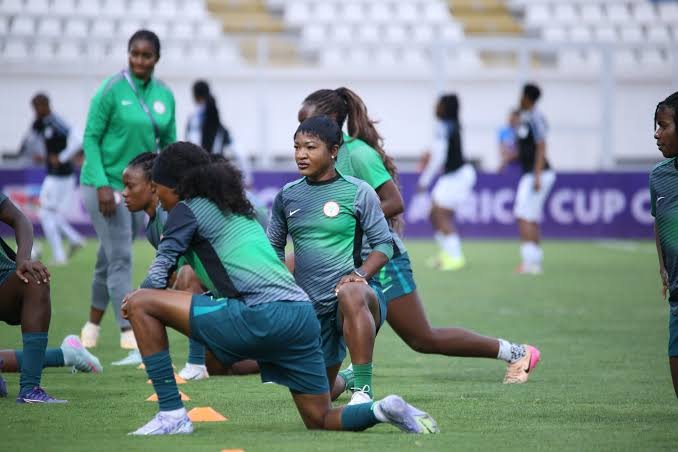
Cash Reportedly Stolen From Super Falcons Players’ Hotel Rooms in Casablanca The Super Falcons’ preparations for the 2026 Women’s Africa Cup of Nations...

AfricaMetro

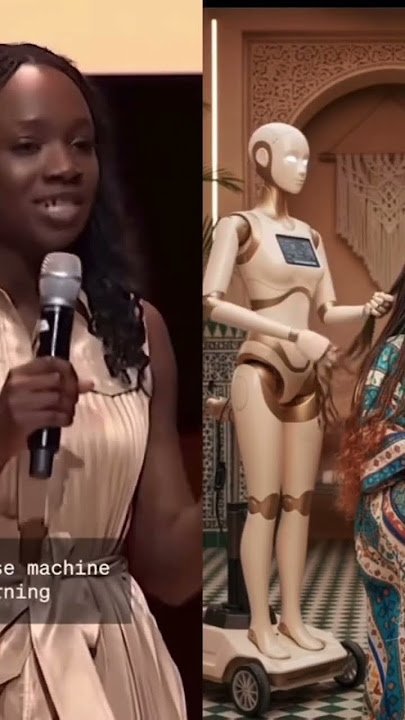
Harvard-Trained Nigerian-American Engineer Raises $7m for Robot Designed to Assist Hair Braiders A Nigerian-American engineer and Harvard graduate, Yinka Ogunbiyi, has secured $7 million in seed funding to develop a robotic device designed to make hair braiding faster and less physically demanding for professional stylists. Ogunbiyi’s company, HaloBraid, is developing what it describes as the world’s first patented braid-assist robot. The device is designed to work with hairstylists by handling some of the repetitive movements involved in knotless braiding. The funding round was led by Seven Seven Six, a venture capital firm founded by Reddit co-founder Alexis Ohanian. AlleyCorp and Bling Capital were also among the investors. The technology has already attracted significant interest, with more than 7,000 salons reportedly waiting to use the system. HaloBraid is designed as a collaborative robot, meaning it works alongside a human stylist instead of attempting to replace one. The hairstylist remains responsible for sectioning the hair, creating the initial knot and completing the final styling. The robot then assists with the repetitive weaving process down the length of the braid before the stylist returns to finish and shape the ends. According to the company, the technology could cut the time spent on some knotless braid appointments by roughly half, allowing salons to serve more clients while reducing the physical pressure on stylists. For Ogunbiyi, the idea was born from personal experience. During the COVID-19 pandemic, she spent four days installing knotless braids on herself, an experience that made her consider how technology could assist with the most repetitive aspects of the process. She subsequently teamed up with co-founder David Afolabi to develop HaloBraid. The company’s technology is also aimed at addressing the physical demands of professional braiding. Stylists who spend years performing repetitive movements can experience problems affecting their wrists, hands, shoulders, back and joints. By assisting with the most repetitive stage of braiding, HaloBraid hopes to reduce the strain on beauty professionals and help them work more efficiently. Ogunbiyi said the technology would not take away from the personal experience of visiting a salon. Rather, she believes it can allow stylists to spend less time on repetitive movements while continuing to handle the creative and personal aspects of hairstyling. Before launching HaloBraid, Ogunbiyi worked on smart kitchen appliances and Internet of Things products. She holds a joint master’s degree in engineering and business administration from Harvard University. With a $7 million investment and thousands of salons already expressing interest, HaloBraid is seeking to introduce robotics into one of the world’s largest and most labour-intensive beauty markets.

Harvard-Trained Nigerian-American Engineer Raises $7m for Robot Designed to Assist Hair Braiders A Nigerian-American engineer and Harvard graduate, Yinka Ogunbiyi, has secured $7...

Entertainment

Days to Their Wedding, VeryDarkMan Sends Peller and Jarvis a Serious Warning

Days to Their Wedding, VeryDarkMan Sends Peller and Jarvis a Serious Warning Social media critic Martins Vincent Otse, popularly known as VeryDarkMan, has...

Sport

IOC Declines to Investigate Infantino Over Alleged Political Neutrality Breach

IOC Declines to Investigate Infantino Over Alleged Political Neutrality Breach The International Olympic Committee has refused to pursue a complaint against FIFA President...

News

IMO APC YOUTH LEAGUE INAUGURATES BOOTH WATCHDOGS, WARD CANVASSERS TO STRENGTHEN GRASSROOTS STRUCTURE AHEAD OF 2027

The Imo State Chapter of the APC Youth League on Thursday, July 23, 2026, successfully hosted its Interactive Session and Banquet at the...

Related Articles

Africa’s Talking Drum: Mama Nkem Left Before Her Daughter Was Ready

By: Chioma Madonna Ndukwu Africa’s Talking Drum: Mama Nkem Left Before Her...

Harvard-Trained Nigerian-American Engineer Raises $7m for Robot Designed to Assist Hair Braiders A Nigerian-American engineer and Harvard graduate, Yinka Ogunbiyi, has secured $7 million in seed funding to develop a robotic device designed to make hair braiding faster and less physically demanding for professional stylists. Ogunbiyi’s company, HaloBraid, is developing what it describes as the world’s first patented braid-assist robot. The device is designed to work with hairstylists by handling some of the repetitive movements involved in knotless braiding. The funding round was led by Seven Seven Six, a venture capital firm founded by Reddit co-founder Alexis Ohanian. AlleyCorp and Bling Capital were also among the investors. The technology has already attracted significant interest, with more than 7,000 salons reportedly waiting to use the system. HaloBraid is designed as a collaborative robot, meaning it works alongside a human stylist instead of attempting to replace one. The hairstylist remains responsible for sectioning the hair, creating the initial knot and completing the final styling. The robot then assists with the repetitive weaving process down the length of the braid before the stylist returns to finish and shape the ends. According to the company, the technology could cut the time spent on some knotless braid appointments by roughly half, allowing salons to serve more clients while reducing the physical pressure on stylists. For Ogunbiyi, the idea was born from personal experience. During the COVID-19 pandemic, she spent four days installing knotless braids on herself, an experience that made her consider how technology could assist with the most repetitive aspects of the process. She subsequently teamed up with co-founder David Afolabi to develop HaloBraid. The company’s technology is also aimed at addressing the physical demands of professional braiding. Stylists who spend years performing repetitive movements can experience problems affecting their wrists, hands, shoulders, back and joints. By assisting with the most repetitive stage of braiding, HaloBraid hopes to reduce the strain on beauty professionals and help them work more efficiently. Ogunbiyi said the technology would not take away from the personal experience of visiting a salon. Rather, she believes it can allow stylists to spend less time on repetitive movements while continuing to handle the creative and personal aspects of hairstyling. Before launching HaloBraid, Ogunbiyi worked on smart kitchen appliances and Internet of Things products. She holds a joint master’s degree in engineering and business administration from Harvard University. With a $7 million investment and thousands of salons already expressing interest, HaloBraid is seeking to introduce robotics into one of the world’s largest and most labour-intensive beauty markets.

Harvard-Trained Nigerian-American Engineer Raises $7m for Robot Designed to Assist Hair Braiders...

5 Members of Same Family Found Dead Inside Abia Residence

5 Members of Same Family Found Dead Inside Abia Residence A family...

US Weighs Military Action in Mali as Jihadist Threat Spreads Across the Sahel

US Weighs Military Action in Mali as Jihadist Threat Spreads Across the...