

By : Chinasaokwu Helen Okoro
Smog-Stricken Streets, Struggling Lungs: Delhi Battles 200,000 Acute Respiratory Cases Amid Toxic Air Surge
The morning air in Delhi looked like a smeared gray canvas, heavy and opaque. For 28-year-old Aisha Khan, it felt like breathing through a damp cloth — every inhalation stifled, every exhale a whisper of protest. She stepped outside her flat only because she had to deliver her younger brother to school, the city’s pollution making every outing a calculated gamble.
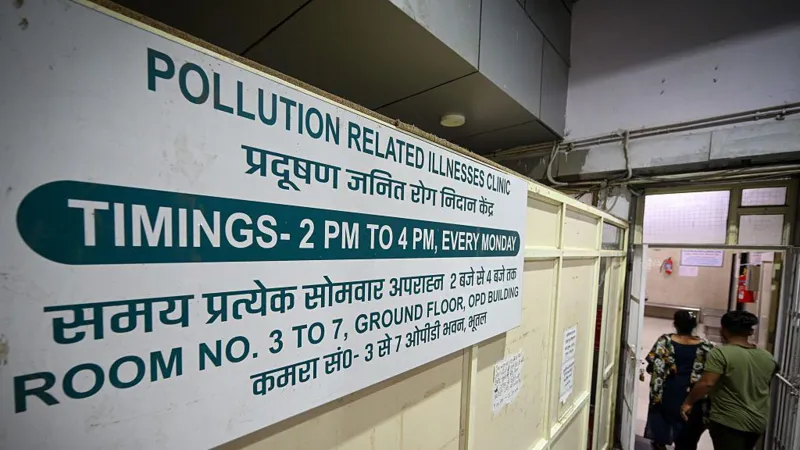
Just a week ago, news had erupted across the city: Delhi had registered over 200,000 acute respiratory illness cases. Clinics overflowed, pharmacies ran out of inhalers, and panic curled through dusty alleys and plush apartment blocks alike. Suddenly, the threat was no longer distant or abstract — it was right outside her door, in every cough that echoed from the streets.
Aisha’s brother, eight-year-old Sami, coughed once. The cough rattled like a sudden gust of wind through their apartment — brief, sharp, alarming. She paused at the door, inhaled, recoiled. Her chest tightened. The mask she wore felt impotent, a flimsy barrier against invisible poison.
She remembered the mornings when the sun’s rays had warmed the city with golden promise. Now the sun was a dull glow behind a blanket of soot and dust. The skyline — once etched and bold — blurred into monotone silence.
On the bus, a young woman cradled a child whose cheeks were flushed, eyes watery. The child’s lips quivered with each breath. Nearby, an elderly man clutched a crumpled tissue to his nose, his brow drawn tight with strain. For many, the choice was not between going out or staying in — the choice was between earning money so they could still buy food and medicine, or staying safe and starving quietly at home.
At work, Aisha sat at her desk, but her thoughts floated elsewhere, heavy and anxious. The building’s air-conditioning hummed, but it did nothing to chase away the smog that crept in around the edges of the windows. Her co-worker, Rajiv, sneezed repeatedly. His eyes burned; he rubbed them dry. He turned white. That afternoon, he left early, coughing loudly, like a cracked door in an old house.
Aisha tried to stay hopeful. She remembered the early days of alarm — when neighbors set up air purifiers in their flats, when volunteers handed out masks at metro stations, when messages flooded social media: “Stay indoors,” “Drink warm water,” “Seek medical help if you cough or wheeze.” Hospitals painted their waiting rooms red with desperation. But thousands still arrived each day — wheezing, breathless, panic-stricken.
One evening, returning from the clinic with an inhaler for Sami, Aisha paused in the stairwell. The faint glow of the corridor light flickered. She placed her hand on the stair rail. Her thoughts drifted, heavy with fear and determination. If this pollution didn’t kill them, the strain — the worry — might. But she also saw the faces of neighbors who rallied together, offering what little they had: a mask, an extra inhaler, bottled water, sympathetic words. In the face of despair, small acts of compassion glowed like lanterns.
That night, Aisha sat by the window, watching the city hum below. She thought of Delhi — its ancient monuments, its crowded bazaars, its dancing monsoon rains. She thought of the lungs of hundreds of thousands — children, old men, women who carried families on their backs. She thought of the coughs in hospital wards, the gasps in waiting rooms, the lines snaking outside pharmacies.
And she resolved: they would survive. Maybe not unscathed — some might carry scars, others might never forget the fear. But Delhi was more than concrete and dust. It was people: persistent, breathing, enduring. As the city slept under the toxic hush, Aisha held Sami close, feeling the soft rise and fall of his chest. She whispered a promise: “We’ll get through this.”
Tomorrow, she’d deliver him to school again. Tomorrow, she’d shop for medicine. Tomorrow, she’d return — mask on, lungs ready — and walk through the gray haze with determined steps. Because every breath was a fight; every breath, a victory.

About The Author

 Footage Triggers Uproar After Doctor Is Seen Attacking Patient in Hospital Ward
  WHO Warns: Skyrocketing Healthcare Costs Push 384 Million Africans Into Poverty
  Kardashian’s Aneurysm Scare Rekindles a Global Warning About Stress and Silent Brain Risks
  Africa Unveils HIV-Prevention Shot That Could Rewrite the Continent’s Health Future
  Regina Daniels’ Tears Unmask the Mental Health Crisis Behind Marital Pain
  Wellbeing accelerator hosts sip & paint event on stress management in Bradford
  DOMINION CITY, AMUWO ODOFIIN PRESENTS… A Glorious Christmas Service: Celebrating the Greatest Gift to Humanity
  VJ Adams and Bimbo Ademoye Reignite Romance Speculation
  Davido Steps Into Osun Politics, Set to Register with Accord Party
  Guinea-Bissau Junta Releases Detained Opposition Figures Amid Pressure to Restore Civil Rule